Best Countries for Americans to Start a Business
Published · The Times of New York
Discover the best countries for Americans to start a business in 2026, including UAE, Portugal, Estonia, Singapore, the UK and the Netherlands.
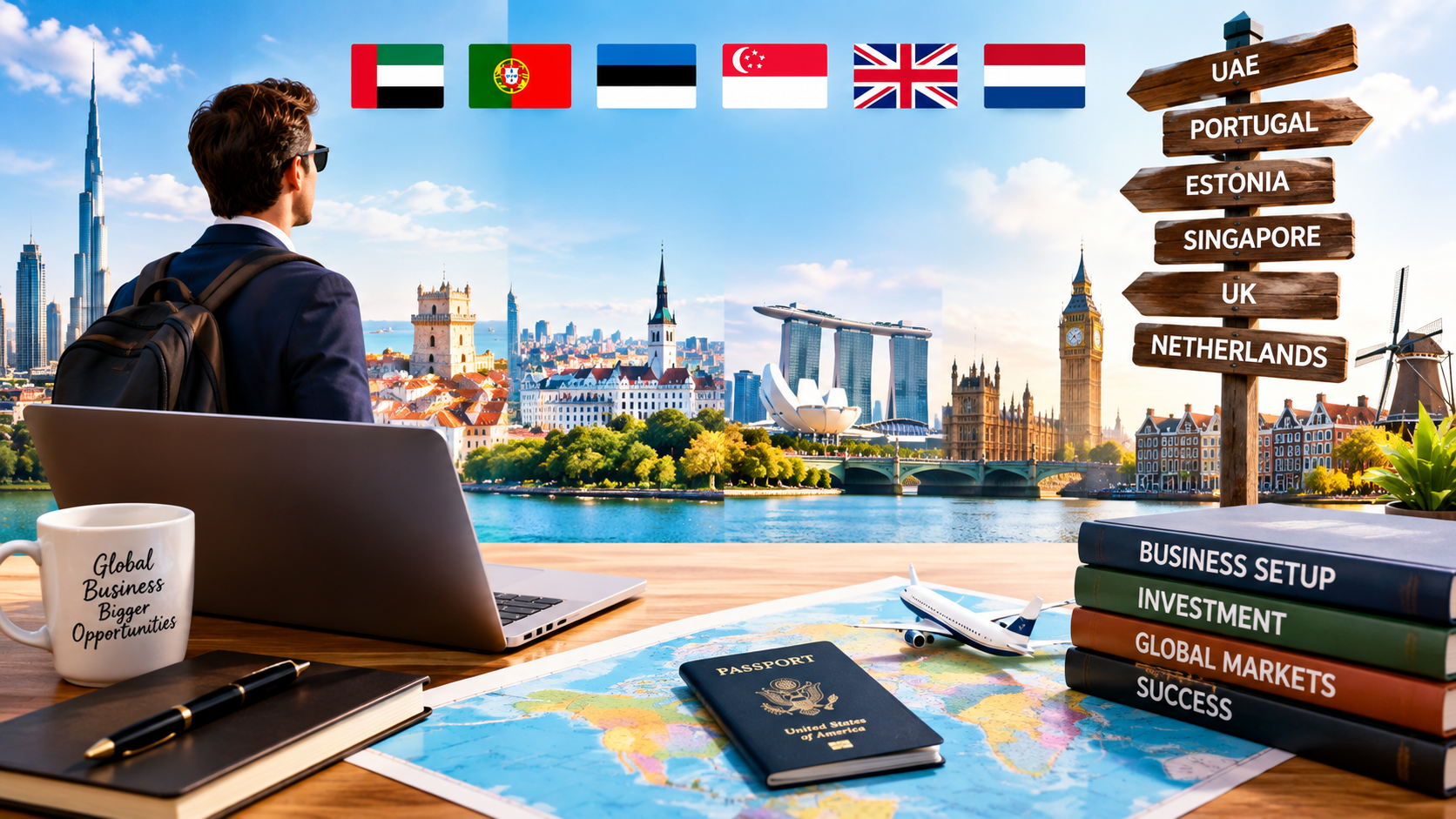
Top Countries Where Americans Can Start a Business: Opportunities, Requirements, and Investment Options
Starting a business outside the United States can give American entrepreneurs access to new customers, international markets, lower operating costs, specialized business ecosystems, and different investment opportunities. But choosing the right country requires more than looking at tax rates or company-registration fees. The best countries for Americans to start a business depend on the type of company you want to build, how much you plan to invest, whether you want to live in the country, and whether your business needs access to a particular market.
For many American entrepreneurs, countries such as the United Arab Emirates, Portugal, Estonia, Singapore, the United Kingdom, and the Netherlands offer interesting options for international business formation. Each has different rules for ownership, company registration, visas, investment, taxation, and local operations.
For many American entrepreneurs, countries such as the United Arab Emirates, Portugal, Estonia, Singapore, the United Kingdom, and the Netherlands offer interesting options for international business formation. Each has different rules for ownership, company registration, visas, investment, taxation, and local operations.
Quick Answer: What Are the Best Countries for Americans to Start a Business?
Some of the countries Americans may consider for starting or expanding a business include:

There is no universal winner. The right country depends on your business model, target customers, investment budget and plans for living abroad.
Why Are Americans Starting Businesses Abroad?
American entrepreneurs may consider international business formation for several reasons.
Some want to enter European or Asian markets. Others are looking for a location closer to international customers, suppliers, investors or employees.
A foreign company can also make sense when the business itself is international. For example, a technology company selling software globally may not need its operations to be based in the same country as its customers.
However, setting up a foreign company does not automatically eliminate U.S. tax or reporting obligations. The IRS states that U.S. citizens and resident aliens generally remain subject to U.S. income tax on worldwide income, even while living abroad.
That makes international tax planning an important part of the decision.
- United Arab Emirates
The United Arab Emirates (UAE) is one of the most prominent destinations for international entrepreneurs, particularly those interested in Dubai or Abu Dhabi.
The UAE allows foreign investors to fully own companies across most economic activities, subject to applicable regulations and restrictions. The country's investment authorities also offer mainland and free-zone structures designed for different types of businesses.
Why Americans Consider the UAE
The UAE can be particularly interesting for:
- Consulting businesses
- Technology companies
- E-commerce
- International trading
- Logistics
- Professional services
- Marketing agencies
- Financial and investment-related businesses
- Startups
Dubai also provides access to customers and business networks across the Middle East, Africa and Asia.
How Can an American Start a Business in the UAE?
A typical process involves choosing a business activity, selecting a mainland or free-zone structure, registering the company, obtaining the appropriate license and arranging business banking.
The exact requirements depend on the activity and jurisdiction.
Americans should also understand that 100% foreign ownership does not mean every business activity has identical rules. Certain strategic or regulated activities can have additional requirements.
For entrepreneurs who want to operate primarily in international markets, a UAE free zone may be worth investigating. A mainland company may be more appropriate when direct access to the UAE domestic market is important.
2.Portugal
Portugal is another option for American entrepreneurs who want to establish a business in Europe.
The country can be attractive to founders interested in the European market, professional services, technology, tourism, digital businesses and internationally oriented companies.
Portugal allows companies to be established by people who want to create a commercial company, and company formation can be handled through official online and in-person processes.
Why Consider Portugal?
Portugal may appeal to American entrepreneurs because it provides access to the wider European market while offering a relatively familiar environment for international founders.
Potential opportunities include:
- Technology startups
- Online businesses
- Consulting
- Tourism
- Hospitality
- Real estate-related services
- Professional services
- Export businesses
Americans who want to live in Portugal while operating a business need to consider immigration separately from company formation.
Portugal provides a residence-visa route for foreign citizens who want to work independently or operate as entrepreneur investors, subject to the applicable requirements.
This distinction is important: forming a company and obtaining the right to live and work in Portugal are separate legal questions.
3.Estonia
Estonia is particularly interesting for online entrepreneurs and digital businesses.
The country's government-backed e-Residency program allows approved international entrepreneurs to obtain a digital identity that can be used to establish and manage an Estonian company online.
According to Estonia's official e-Residency program, company formation can be completed online after obtaining e-Residency, and the system is designed to let entrepreneurs manage many company activities digitally.
Why Estonia Is Attractive for Digital Entrepreneurs
Estonia may be worth considering if you operate:
- SaaS businesses
- Online consulting
- Digital agencies
- Software companies
- E-commerce businesses
- Freelance businesses
- International service companies
One of the biggest advantages is the digital nature of the system. However, there is an important point many new entrepreneurs misunderstand:
Estonian e-Residency is not immigration residency.
It gives you a digital identity and access to Estonian business services. It does not automatically give an American the right to live in Estonia.
That makes Estonia particularly interesting for someone who wants to operate an EU company remotely rather than immediately relocate.
4. Singapore
Singapore is a major international business hub and can be particularly relevant for American entrepreneurs targeting Asian markets.
Its location, infrastructure, financial sector and technology ecosystem make it an option for businesses that want a base in Southeast Asia.
What Businesses Can Americans Start in Singapore?
Potential areas include:
- Technology
- Fintech
- E-commerce
- International trade
- Consulting
- Logistics
- Professional services
- Regional headquarters
Singapore has specific rules for foreigners. Foreigners generally need to use a corporate service provider to register a business and must meet local residency requirements.
If an American entrepreneur wants to move to Singapore and personally run the business, a work pass is required.
Singapore's EntrePass is specifically aimed at eligible foreign entrepreneurs operating businesses that are venture-backed or possess innovative technologies.
That means Singapore can be especially relevant for technology-focused founders rather than someone simply looking for the cheapest place to register a company.
5. United Kingdom
The United Kingdom remains a major destination for international companies and American entrepreneurs.
London's financial sector, established legal system, large consumer market and access to international business networks make the UK particularly relevant for companies operating in:
- Financial services
- Technology
- Consulting
- E-commerce
- Media
- Professional services
- Education
- International trade
Can an American Start a Company in the UK?
Yes, but company formation and immigration should be considered separately.
A company can be incorporated in the UK, while an entrepreneur who wants to personally live and work there must meet the relevant immigration rules.
For example, the UK's Innovator Founder visa requires an eligible business idea to be assessed and endorsed by an approved endorsing body. Applicants must also meet English-language and personal-funds requirements.
The UK is therefore potentially attractive for innovative businesses, but simply registering a UK company does not automatically provide immigration permission.
6. Netherlands
The Netherlands can be an interesting option for Americans who want to build an EU-focused business.
Its location makes it useful for companies involved in European trade, logistics, technology, professional services and international commerce.
The Netherlands also has a startup residence permit for entrepreneurs from outside the EU, EEA and Switzerland who want to develop an innovative business.
The startup residence permit is generally valid for a maximum of one year and requires the entrepreneur to work with an approved facilitator.
Why Consider the Netherlands?
The country may be particularly relevant for:
- Innovative startups
- Technology companies
- Logistics businesses
- International trade
- Software companies
- Sustainability businesses
- EU-focused services
Entrepreneurs who want to establish a physical business presence should also consider Dutch registration, business-address and permit requirements.
Which Country Is Best for Your Business Type?
Instead of asking which country is universally the best, consider which country fits your specific business.
For an Online Business:
Estonia can be attractive because of its digital company-management infrastructure.
Portugal can also be interesting for entrepreneurs who want a European base and potentially want to relocate.
For International Trade:
The UAE can be particularly relevant because of its geographic position between Europe, Asia and Africa and its extensive logistics infrastructure.
Singapore is another option for entrepreneurs targeting Asian markets.
For a Technology Startup:
Singapore, Estonia, the Netherlands and the UK all have established technology and startup ecosystems.
The right choice depends on funding requirements, customer location, talent availability, immigration plans and regulatory needs.
For a European Business:
Portugal, Estonia, the Netherlands and the UK can all provide different advantages, although the UK is outside the European Union.
If access to the EU single market is central to your strategy, an EU member state may deserve particular attention.
How Much Money Do You Need to Start a Business Abroad?
There is no single investment amount that applies to every country.
Your actual startup budget may include:
- Company registration
- Government fees
- Business licenses
- Professional services
- Accounting
- Legal fees
- Office space
- Employee salaries
- Insurance
- Banking costs
- Website and technology
- Marketing
- Immigration expenses
- Working capital
A small online consulting company may require far less capital than a restaurant, manufacturing company or technology startup with employees.
This is why entrepreneurs should calculate the total first-year operating cost, rather than focusing only on the company-registration fee.
Business Registration vs. Business Immigration
One of the most important things Americans should understand is that starting a company and moving to another country are not necessarily the same process.
You may be able to establish a company without becoming a resident.
On the other hand, if you want to personally live in the country and manage your business there, you may need:
- An entrepreneur visa
- A startup visa
- A work permit
- A residence permit
- Proof of funds
- Business-plan documentation
- Local registration
The requirements vary by country. For example, Estonia's e-Residency supports remote company administration but does not itself grant physical residence. Singapore requires a work pass for foreigners who want to move there to run their business. The UK has separate immigration routes for qualifying founders.
What About U.S. Taxes on a Foreign Business?
This is one of the most important issues for American entrepreneurs. Moving a company overseas does not automatically remove U.S. tax obligations.
The IRS states that U.S. citizens and resident aliens generally remain subject to U.S. federal taxation on worldwide income. Depending on the structure of your foreign company and financial accounts, additional U.S. reporting requirements may apply.
For example, Americans with qualifying foreign financial accounts may have FBAR reporting obligations when the aggregate value of those accounts exceeds the applicable threshold.
Foreign business ownership can also create complicated tax issues involving corporate classification, foreign reporting, controlled foreign corporations, foreign tax credits and other rules. For this reason, an American entrepreneur should speak with a qualified U.S. international tax professional before establishing a foreign company.
How to Choose the Right Country for Your Business
Before selecting a country, ask these questions:
1. Where Are Your Customers?
If most customers are in Europe, an EU location may make more operational sense than a company based in Asia.
2. Where Will You Live?
If you plan to remain in the United States, remote company administration may be important. If you want to relocate, immigration rules become a major factor.
3. How Much Can You Invest?
A low-cost online business and a capital-intensive company have completely different requirements.
4. Do You Need Local Employees?
Hiring requirements, employment laws and payroll costs can substantially affect the total cost of operating abroad.
5. What Are the Tax Consequences?
Look at both the country's tax system and your continuing U.S. tax obligations.
6. Does Your Industry Require a License?
Financial services, healthcare, education, telecommunications, food businesses and other regulated industries can require additional approvals.
Final Thoughts
The best countries for Americans to start a business depend on what you are building and where you want to operate.
The UAE can be attractive for international trade and services. Portugal can appeal to entrepreneurs looking for a European base. Estonia stands out for digital-first company administration. Singapore offers access to Asian markets and a strong technology ecosystem. The UK provides a mature global business environment, while the Netherlands can be useful for innovative businesses targeting Europe.
But the cheapest company registration is not necessarily the best business decision. Before investing, compare the full picture: ownership rules, taxes, immigration, licensing, banking, customers, employees, operating costs and U.S. reporting obligations.
For an American entrepreneur, the right international business location is ultimately the one that fits the business model and long-term plan not simply the country with the lowest registration cost.
Frequently Asked Questions
What are the best countries for Americans to start a business?
Popular options include the UAE, Portugal, Estonia, Singapore, the UK and the Netherlands. The appropriate choice depends on the business type, investment level, target market, tax situation and whether the owner plans to relocate.
Can a U.S. citizen start a business in another country?
Yes. Americans can establish businesses in many countries, but each country has its own company-registration, ownership, licensing and immigration rules.
Can Americans own 100% of a foreign company?
In some countries, yes. For example, the UAE allows 100% foreign ownership across most economic activities, although certain regulated or strategic activities have additional restrictions.
Is Estonia e-Residency the same as residency?
No. Estonia's e-Residency provides a government-issued digital identity that can help entrepreneurs establish and manage an Estonian company online. It does not automatically provide the right to live in Estonia.
Does an American have to pay U.S. taxes on a foreign business?
U.S. citizens and resident aliens generally remain subject to U.S. taxation on worldwide income. The exact tax treatment of a foreign business depends on its structure and the owner's circumstances.
Which country is best for an online business?
Estonia can be particularly interesting for digital entrepreneurs because of its online company-management infrastructure. Other countries, including Portugal, the UAE and the UK, may also make sense depending on the entrepreneur's customers, residence plans and business model.
Can I start a foreign company without moving abroad?
In some cases, yes. Company formation does not always require physical relocation. However, the rules vary by country, and running a business physically from a particular country may require appropriate immigration or work authorization.