Essential Cooking Tips Every Beginner Should Know
Published · The Times of New York
In the beginning, cooking may appear very tough, but it's an essential life skill that everyone can master. If you want to enjoy healthy meals, to save mo…
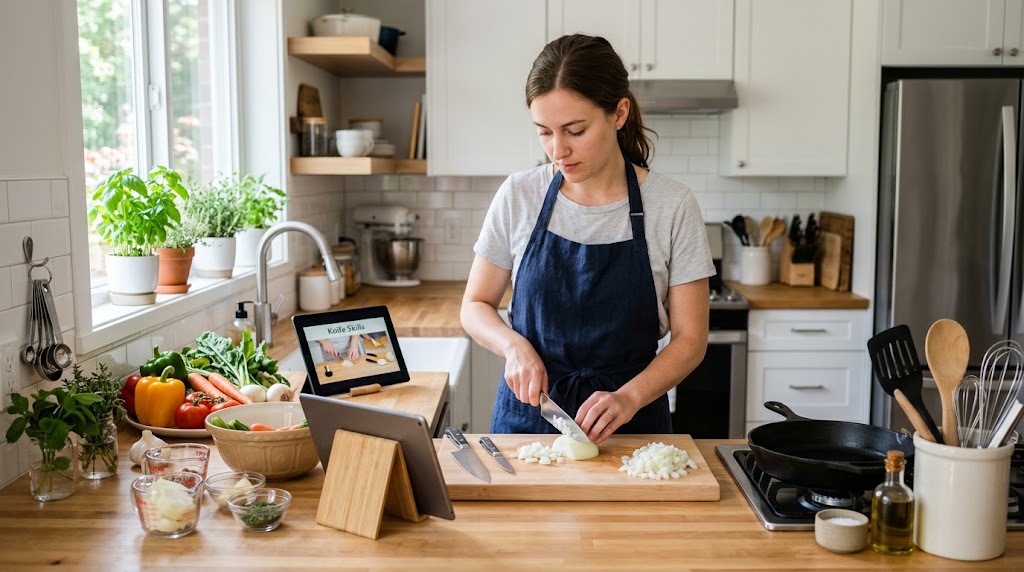
In the beginning, cooking may appear very tough, but it's an essential life skill that everyone can master. If you want to enjoy healthy meals, to save money by eating out or just to show off in front of your family and friends, these essential cooking tips for beginners will get you started. Cooking is supposed to be available, fun, and, above all, delicious! Starting out in the kitchen can feel overwhelming, but mastering a few practical cooking tips for beginners will instantly boost your confidence.
Why is Learning Cooking Skills Essential?
There are many factors which make you learn cooking skills, and the biggest advantage is that you will get a lot out of this. The following are the top reasons why you will benefit a great deal from learning to cook:
Healthier Foods
Since you will be preparing your meals by yourself, you will have total control over what is included in them. It is because of this that you will stay away from extra sugar, fat, and other preservatives included in packaged food items. For instance, there is an interesting fact: home cooked meals usually contain 50% less fat and sodium than meals prepared in a restaurant.
Economize
It cannot be denied that there are higher productivity benefits to cooking food at home. The food prepared at home costs nearly five times less than those served in restaurants. You can save money not only in terms of food costs but also in other implied costs associated with eating out, such as delivery charges and the high price of menu items.
Let Your Creativity Shine through
Cooking is a form of art, and it is where you will get a chance to explore all of your creative notions in the kitchen. There is no limit to what you can experiment with in terms of flavors, spices, and methods. Nothing stops you from making any modification, even if you are not a professional chef. The very basic recipe of tomato sauce can be easily modified using whatever herbs and spices you like in your cooking style, and even using roasted vegetables and spices of different cultures. Crowding the pan and rushing the preheating step are common cooking mistakes beginners should avoid for better results.
Essential Cooking Tips For Beginners
This simple beginner cooking guide breaks down essential kitchen techniques so you can prepare meals stress-free. Following are the tips:
1. Essential Kitchen Tools for Beginners
Think of this beginner kitchen guide as your step-by-step roadmap to setting up essential tools and cookware. A large or expensive set of kitchen utensils is not required in order to commence your cooking journey; instead, just a few strong and versatile utensils can take care of all your basic requirements and technique learning. Learning basic cooking skills, like proper knife handling and heat control, makes everyday meal preparation much easier. For that purpose, here is what the basic set of a beginner should include:
Chef’s Knife
This could probably be the most important kitchen utensil - arguably any chef’s knife. They are highly versatile and can be used for almost everything from cutting vegetables to slicing meat, mincing herbs, and even crushing garlic. In purchasing a chef’s knife, get a knife that fits well in your hands and balances perfectly. Dull knives are more difficult to handle and are more dangerous than sharp ones. Helpful cooking tips for first-time cooks often focus on safety, such as learning proper knife grip to prevent slips
Cutting Board
Good quality cutting board will protect both your countertops and blades of your knives from scratching. Wood or bamboo cutting boards would be great options since they do not harm knives because of their antibacterial qualities.
Non-stick Pan
Non-stick skillet makes a great starter pan since you don't need to add much oil when cooking and it's easy to clean up after. The pan can be used for frying, sautéing and scrambling eggs or even pancakes. It must have a thick bottom for even distribution of heat. The only thing that needs to be mentioned when talking about non-stick pans is not to use metal utensils as they may damage the coating.
How to maintain: The coating of the non-stick pan can be protected from scratches with silicone and wood utensils.
Saucepan
Capacity of the pan is 2-3 quarts. In case anyone intends to make sauce, boil pasta or cook grains and soups, then this is the utensil for them. Strong and flexible stainless steel saucepan is more efficient as far as heat distribution is concerned. This is very important to ensure even cooking of the food. Wherever possible, purchase a saucepan with a tightly fitting lid to reduce cooking time.
Other Essential Kitchen Tools
Some other essential equipment that is required for the beginner are:
- Tongs: Tongs will be helpful in flipping meat, salad tossing, or vegetables while roasting. These will also offer you more control during cooking and they provide you an easier substitute to spatulas.
- Measuring Cups and Spoons: Measurement is very important for most of the recipes; particularly, baked goods. Using measuring cups (dry and liquid) and spoons helps you in measuring recipes correctly and reproducing them.
- Peeler: The peeler is helpful when you have to peel off potatoes, carrots, or any other vegetable. Try a ‘Y’ shaped peeler. It provides you a more ergonomic design and hence easy to use.
- Wooden Spoon and Spatula: Wooden spoons will be perfect for stirring soups and sauces, as there are no highly acidic ingredients in these.
2. Stock Your Pantry with Basic Ingredients
Before attempting complex recipes, it helps to focus on cooking basics for beginners to build a strong foundation. Having an organized pantry will be just like buying insurance when you want an easy meal. There are different kinds of meals that you can make quickly and easily without going shopping if you have the right things in your pantry. The following is a list of pantry ingredients that every cook must have:
Fats and Oils
First there is olive oil which is a very versatile oil. It can be used for sautéing, dressing salads, roasting foods, etc. If it is an extra virgin oil, then it can only be used in cold foods like salad dressings. Otherwise, common olive oil can be used for cooking and can bear high temperatures.
Vegetable Oil
The vegetable oil is more suitable for the purpose of frying because its smoking point is the highest compared to that of any other oil. Additionally, it is also less expensive than olive oil.
Butter
Similar to other fat, butter adds flavor to various dishes. This fat makes a reliable ingredient for baking and preparing other dishes.
Pro Tip: One needs to always keep both salted and unsalted butter at home, the former for using in spreading and fast cooking recipes, and the latter for precise baking purposes and particular salt content.
3. Learn Basic Cooking Techniques
If you're wondering how to start cooking for beginners, the best approach is to pick three simple recipes and practice them until they feel natural. Firstly, it should be noted that learning several main techniques of cooking will provide you with immense confidence in the kitchen and help you find out how to cook a huge variety of dishes.
Using easy cooking hacks for beginners, such as preparing all your ingredients before turning on the stove, keeps dinner prep calm and organized.
After you know the basics of cooking dishes, you will be able to prepare meals which will be tasty, well-cooked at the right level, and attractively presented. Mastering easy cooking techniques like sautéing and roasting will help you transform everyday ingredients into flavorful dishes. In this respect, the following techniques are among the most popular ones which you will use being a beginner cook:
Sautéing
Focusing on beginner-friendly cooking techniques like roasting and simmering allows you to build flavor without complex methods. The stir fry method is among the simplest and quickest methods and is suitable for cooking vegetables, proteins, and even starchy foods such as potatoes. A little amount of oil is required in a hot pan and medium to high temperatures for cooking the food, hence forming a golden brown crispy surface. For sautéing with high heat, neutral oils such as vegetable oils will always do, while low temperatures sautéing is done using olive oil since it tends to vaporize its flavor when the temperature gets high.
Boiling and Simmering
Both boiling and simmering are types of cooking procedures in which food is cooked with boiling water or other liquids like broth. Boiling procedure involves high temperature cooking and is mostly ideal for cooking pasta, rice, potatoes, and all sorts of vegetables. This is because this procedure operates at 212° F/100° In simmering low heat is used and it occurs at a range of 180°F-200°F. Simmering is a great way to cook foods that take a long time by using liquids such as soups, stews and sauces. Seasoning food properly and boiling pasta to al dente are two essential cooking skills every beginner should know.
Baking
Despite that baking is mostly connected with dessert recipes, it is as versatile as cooking technique in terms of creating savory dishes, like casseroles, quiches and most pasta dishes. Baking implies indirect heating, meaning that the cooking will be even on both sides. The secret of baking success, especially in terms of baking recipes, is precision in measurements.
Grilling and Broiling
Grilling and broiling are the procedures involving hot oil and cooking foods quickly while giving them a chargrilled and smoky taste. Broiling is the process of cooking food under direct heat in an oven. It can also be used to add a crispiness to some meat dishes or for rapid cooking of thin slices of meat, fish, or even vegetables. Grilling is always done outdoors on the grill, hence giving your food a smoky taste and grill marks. It is perfect for steaks, burgers, fish, and even zucchini or bell peppers.
4. How to Understand and Cook a Recipe
Smart kitchen tips for beginners such as reading the full recipe before starting can save you time and prevent common mistakes. The understanding of a recipe is the very first thing that one needs to learn to increase his confidence in cooking. Before firing up your stove read the whole recipe until the end. You will know exactly what kind of ingredients and other accessories and timings are required at each step according to the recipe.
Following basic cooking tips for beginners like keeping your workspace tidy and reading recipes twice, takes the guesswork out of meal preparation.
Pro Tip: Pay attention to marinating and chilling times as well as indications in the recipe that you have to do certain steps while something else is cooking. There are so many recipes that assume you will start chopping while something is browning, and if you do not notice that in advance you will simply get behind schedule.
Ingredients and Materials for Cooking Required Before Starting
This is for cooking pasta and it is called “mise en place,” which is French for “everything in its place.” This involves pre-measuring all ingredients, preparation of ingredients and having them prepared for cooking. This reduces stress, eliminates mistakes and makes the process much easier, especially when the recipe involves steps that require doing the same
Know Your Measurements
Understanding kitchen basics every beginner should know, like measuring dry versus wet ingredients, ensures consistent baking and cooking results. Applying these budget-friendly home cooking tips allows you to recreate restaurant-quality meals right in your own kitchen. It is extremely important to measure things accurately while cooking, particularly baking.
A little variation in quantity will lead to a drastic change in taste and texture of the baked product. You should learn some common abbreviations such as tsp (teaspoon) and tbsp (tablespoon) in order to avoid confusion while cooking from a recipe.
Important Conversions to Remember:
- 1 tablespoon (tbsp) = 3 teaspoons (tsp)
- 1 cup = 16 tablespoons
- 1 ounce (oz) = 2 tablespoons (liquid)
- 1 pint = 2 cups
- In case of metric conversion, 1 cup = 240 ml and one tablespoon = 15 ml.
Learning these basic conversions will help you to understand recipes easily and make any alterations where required. By mastering these basic conversions, you will find yourself comfortably using the recipes and altering them where required.
Taste Adjustment of Recipes on Your Own
If you're wondering how to cook for beginners without making a mess, start with simple, one-pan recipes. Since you want to cook more and feel the process, most likely you will need to start altering the recipe according to your taste preferences. Maybe you prefer that the flavor of your garlic be a bit stronger, in which case, you will have to use two or three cloves. Maybe you need some olive oil to sauté things rather than using butter.
Pro Tip: In the first cooking of the recipe, you must follow the recipe strictly, but in your second cooking attempt, you can try modifying the seasonings or ingredients according to your taste or requirements. You may have to reduce the amount of salt, oil, or sugar used.
Taste as you Go
Taste your dish along the way instead of just at its completion. In this way, you can adjust various parts of the cooking, adding a bit of cold water out of pasta water or more salt or balancing acidity at a time when there’s still time to remedy any problems. A fine example is soups and sauces, which usually benefit from being seasoned out a little bit at a time, tasted, and adjusted again until they come out right. Understanding how to become a better home cook starts with tasting your food as you go and adjusting the seasoning.
Pro Tip: Keep a spoon on hand to taste frequently, and use another clean spoon each time because, well, food safety is important.
Have an Ingredient Substitution Chart Ready
Ingredient substitution is always possible; however, it becomes easier in the absence of certain ingredients in cooking. The Ingredient Substitution Chart will show you how to cope with the recipe despite the fact that you don’t have all the ingredients required at the very beginning. For instance, if the recipe requires garlic, and you have none, you can replace the garlic with garlic powder (1 clove garlic = 1/8 tsp garlic powder).
5. Practicing and Having Fun
The trick to become a good cook is to practice. Failures must not hold you back because they are an essential part of your learning experience and with time, they will only make you better at cooking. You must set yourself realistic goals, learn one new recipe per week or learn how to cook some dishes using some cooking technique such as knife skill or preparation of tomato sauce.
Conclusion
Nobody has to be scared of learning to cook. Besides, cooking can be treated as art or a stress relief method, or it may simply become a fun thing to do with friends or relatives when cooking food together. Put on some music, choose ingredients and try. Appreciate little wins, such as preparation of some dish from scratch or successful improvement of the taste of some recipe. The more you spend time in the kitchen, the more comfortable it will become to you. If you follow essential cooking tips for beginners sooner or later, you will start making something on your own!
Frequently Asked Questions
What are the best cooking skills every beginner should learn?
For beginners, it is best to begin with easy recipes, measure your ingredients, read the recipe through completely, and learn how to chop, boil, and sauté. Being organized in the kitchen will help too.
What are the most common cooking mistakes that beginners make?
Some of the most common mistakes are cooking on high heat, not preparing ingredients beforehand, overseasoning, overcrowding the pan, and forgetting to taste as you cook.
What kitchen gadgets do beginners need to begin cooking?
A chef's knife, cutting board, measuring tools, frying pan, saucepan, mixing bowls, spatula, and a food thermometer are some of the things needed by beginners in the kitchen.
How can beginners enhance their culinary abilities?
The answer is regular practice, beginning from easy recipes, mastering the basics of cooking, watching video tutorials, and experimenting with new ingredients.
Which meals are the easiest for beginners?
Some easy-to-prepare meals are fried eggs, pasta meals, stir-fried vegetables, grilled chicken, soups, salads, and baked potatoes. Such recipes involve basic cooking techniques and commonly used ingredients.
How can beginners prevent burnt food while cooking?
It is recommended to cook at medium heat, unless specified in the recipe, use timers, stir food where needed, and never to leave the stove unattended while cooking.
Why is it important to read a recipe before cooking?
By reading the recipe in advance, one will be able to get a general idea of the process, collect all necessary ingredients, and prepare the equipment.