Everything U.S. Women Should Know About Menopause Symptoms and Relief
Published · The Times of New York
Introduction: Understanding Menopause and Why It Matters Every woman in the U.S experiences the Menopausal phase in her life, accompanied by symptoms like…
Introduction: Understanding Menopause and Why It Matters
Every woman in the U.S experiences the Menopausal phase in her life, accompanied by symptoms like confusion, discomfort, and sometimes silence. Its onset is usually between the ages of 45 and 55, marking the end of fertility and menstruation. Although it’s a normal biological transition, the symptoms of menopause can sometimes be physically and emotionally challenging. It's very important to understand what happens during menopause and how it can be managed, as this knowledge helps improve quality of life and protect long-term health.
What Causes Menopause?
Menopause is a natural process that happens when the ovaries gradually decrease the formation of hormones estrogen and progesterone. This hormonal shift leads to an irregular menstrual cycle (periods) that eventually stops. Naturally, there are three main stages:
- Perimenopause: The initial stage begins several years before menopause as hormone levels fluctuate.
- Menopause: This stage is confirmed after 12 consecutive months without a menstrual period.
- Post-menopause: The stage that comes after menopause. In this stage, the symptoms may ease, but the health risks like heart disease and bone loss can rise.
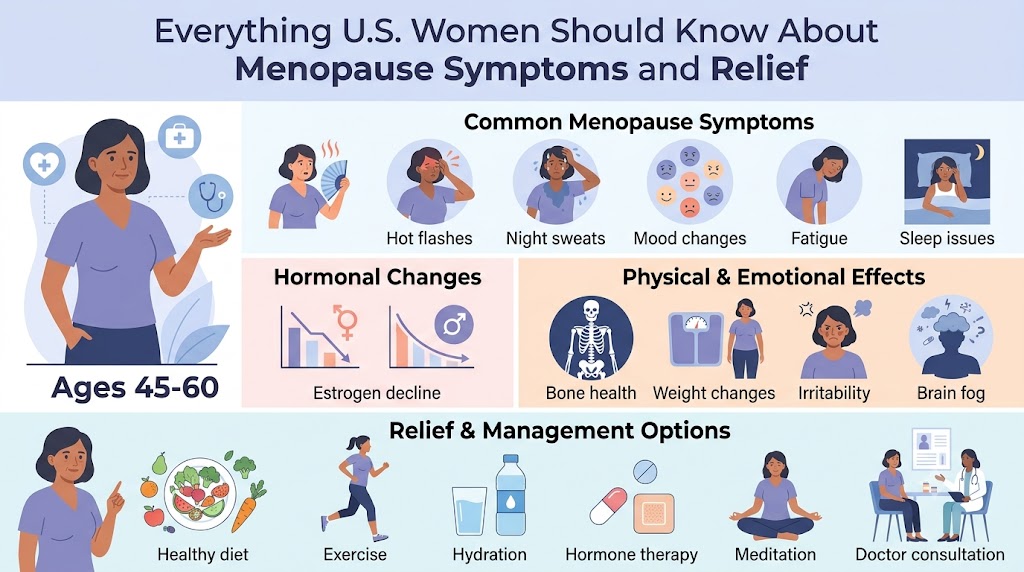
Common Menopause Symptoms
Every woman’s experience differs, but some symptoms are usually common. It's important to know those symptoms so that they can be managed easily.
- Hot Flashes and Night Sweats: It is one of the most common symptoms, usually seen in 80% of women. It includes hot flashes that cause sudden feelings of warmth, sweating, and facial redness. Episodes of night sweat often disrupt sleep and cause fatigue.
- Mood Changes: A phenomenal fluctuation in the hormonal levels causes irritability, anxiety, and depression. So it's very important to manage stress and emotional health in this phase of life.
- Sleep Problems: It has been reported by many females that the normal sleep pattern disturbs in menopause. They usually have trouble falling asleep and staying asleep.
- Vaginal Dryness and Discomfort: It is one of the common symptoms. It happens due to a decrease in estrogen levels, leading to vaginal dryness, itching, and sometimes pain during intercourse. A great help can be achieved by the use of over-the-counter lubricants such as estrogen creams.
- Weight Gain and Slower Metabolism: Fat accumulation is usually seen as the hormonal changes occurs in menopausal women. Resultantly abdomen fat accumulation occurs. This can be managed by doing regular exercise and eating a balanced diet.
- Bone and Heart Health Concerns: There is a high risk of bone issues like osteoporosis and heart disease in postmenopausal women. It's vital to monitor cholesterol and bone density after menopause.
Effective Strategies for Managing Menopause Symptoms: Menopause management can minimize the symptoms like discomfort, and improves the well-being, and maintain health. Here are some easy steps:
1. Focus on Nutrition: Menopausal women always prefer to eat a balanced diet that is rich in calcium, vitamin D, fiber, and phytoestrogens. Moreover, eating green leafy vegetables, salmon, flaxseeds, beans, and whole grains is also beneficial. There are certain things whose intake must be limited, such as caffeine, processed foods, and alcohol, as they can trigger hot flashes. Water intake should be increased as dehydration worsens fatigue and increases hot flashes.
2. Stay Physically Active: Staying physically active and doing regular exercise helps to reduce stress, control weight, improve mood, and protect bone health. Doing cardio for 150 min per week, like brisk walking, swimming, or cycling, is a great help. Mind-body workouts like yoga are important for flexibility and relaxation.