How Much Does It Cost to Live in Florida in 2026?
Published · The Times of New York
How much does it cost to live in Florida in 2026? See average rent, groceries, utilities, transportation, salaries, taxes and monthly living costs.
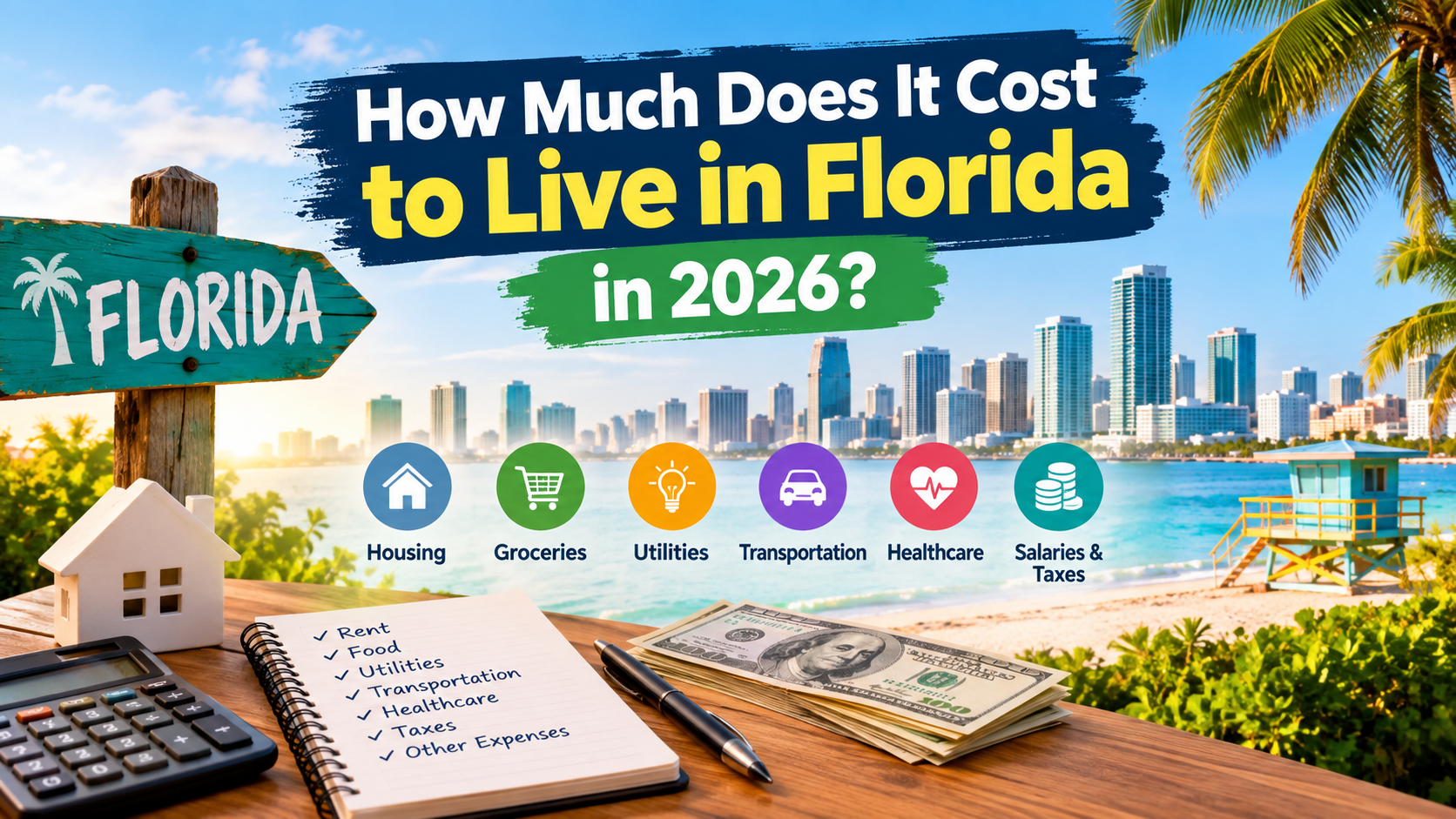
If you are wondering how much does it cost to live in Florida in 2026, a realistic answer depends heavily on where you live, whether you rent or own a home, and how many people are in your household.
For a single adult, a basic Florida budget can be around $3,000 per month before adding significant lifestyle expenses, while a family of four can need considerably more. The Florida Housing Data Clearinghouse's 2024-based household budget estimates put the basic monthly cost at about $2,992 for one adult and $6,451 for two adults with two children. More recent 2026 rental data shows a statewide median rent of about $1,508 per month, although housing costs vary substantially between cities.
So, is Florida expensive to live in? It can be affordable compared with some high-cost parts of the United States, but housing, insurance, transportation, food and location can make a major difference.
Quick Answer: How Much Money Do You Need to Live in Florida?
For a basic starting budget, you can think about Florida living costs like this:
Household:
One adult: Around Approximate Monthly Budget $3,000+
Two adults: Around Approximate Monthly Budget $4,200+
Family of four: Around Approximate Monthly Budget $6,450+
Family of four with child care: Around Approximate Monthly Budget $7,600+
These figures should be treated as budgeting benchmarks rather than universal prices.
The Florida Housing Data Clearinghouse's household-survival-budget model includes housing, food, transportation, healthcare, technology, taxes and miscellaneous expenses.
Your actual budget could be much lower or higher depending on your city, rent, transportation, health insurance, childcare and lifestyle.
Is Florida Expensive to Live In?
Florida is not equally expensive everywhere. Recent cost-of-living estimates differ slightly depending on the data source and methodology. RentCafe's September 2026 data puts Florida's overall cost of living about 3% below the national average, while Salary.com's 2026 estimate puts Florida about 2% above the national average. These differences demonstrate why a single statewide number should not be treated as an exact monthly budget.
Housing is one of the biggest reasons for the difference between cities. For example, Miami can have a very different housing budget from Jacksonville, Ocala or Tallahassee. RentCafe's 2026 city comparisons show Jacksonville and Ocala below the national average, while some other Florida markets are closer to or above the national level.
If you are planning to move to Florida, the city and ZIP code may matter more than the statewide average.
Average Rent in Florida in 2026
Rent is usually the largest monthly expense for people who do not own a home. According to Apartment List's August 2026 data, Florida's statewide median rent was approximately $1,508 per month, compared with a national median of about $1,390. The median one-bedroom rent was approximately $1,273.
However, these numbers should not be interpreted as the rent you will necessarily pay. A one-bedroom apartment in a major metro area can cost substantially more than a similar apartment in a smaller Florida city. Location, neighborhood, building age, amenities and proximity to employment centers can all affect rent. Before moving, compare actual rents in the specific city where you plan to live rather than relying only on the statewide figure.
How Much Does Housing Cost in Florida?
Buying a home requires a different budget from renting. U.S. Census Bureau data for 2020–2024 shows a Florida median owner-occupied home value of $359,000. The same Census data shows median monthly owner costs of approximately $1,959 for homeowners with a mortgage. Homeownership costs, however, go beyond the mortgage payment.
A Florida homeowner may also need to budget for:
- Property taxes
- Homeowners insurance
- Flood insurance where applicable
- HOA fees
- Repairs and maintenance
- Utilities
- Lawn and pest services
Insurance deserves particular attention when calculating the true cost of owning a home in Florida. Two homes with similar purchase prices can have very different monthly costs because of insurance, location and other property-specific factors.
How Much Do Groceries Cost in Florida?
Food is another major part of the Florida budget. The Florida Housing Data Clearinghouse, using its household survival budget model, estimates monthly food costs of about $501 for a single adult and approximately $1,540 for two adults with two children.
A family with childcare needs can have a different overall budget. Your grocery bill can vary considerably depending on where you shop and how you eat. A person who cooks most meals at home can generally control food spending more easily than someone who frequently eats at restaurants.
For a realistic budget, include:
- Groceries
- Restaurants and takeout
- Coffee and drinks
- Household supplies
- Personal-care products
Food prices also change over time, so a 2026 budget should be reviewed periodically rather than treated as a fixed number.
Utility Costs in Florida
Florida's warm climate means electricity can become an important household expense, particularly during the summer.
Your utility budget may include:
- Electricity
- Water
- Sewer
- Trash
- Internet
- Mobile phone service
Air conditioning is particularly important. A larger home, older air-conditioning system, poor insulation or a thermostat set to a lower temperature can increase electricity usage. RentCafe's 2026 comparison estimates Florida utilities at roughly 2% below the national average, but individual household bills can vary substantially.
When comparing apartments, don't look only at advertised rent. Ask about average electricity, water and other recurring charges.
Transportation Costs in Florida
Transportation can be another significant expense because many Florida residents depend on cars. The Florida Housing Data Clearinghouse's household budget model estimates transportation expenses at approximately $424 per month for one adult and $869 for two adults with two children.
Your actual transportation budget could include:
- Car payment
- Auto insurance
- Gasoline
- Maintenance
- Registration
- Parking
- Tolls
- Public transportation
If you work remotely and live in an area where most errands are close to home, you may be able to spend less. Someone with a long daily commute may need a considerably larger transportation budget.
Healthcare Costs in Florida
Healthcare costs should also be included when calculating how much it costs to live in Florida. The Florida Housing Data Clearinghouse's 2024 household budget estimates healthcare costs at about $189 per month for one adult and $900 per month for two adults with two children. These figures are budgeting estimates, not a quote for an individual health-insurance plan.
Your healthcare expenses may include:
- Health insurance premiums
- Doctor visits
- Prescription medications
- Dental care
- Vision care
- Out-of-pocket expenses
People moving to Florida should calculate their expected healthcare costs separately, especially if they are changing employers or insurance plans.
Does Florida Have a State Income Tax?
One financial advantage frequently considered by people moving to Florida is that the state does not impose an individual state personal income tax. That does not mean residents have no taxes.
Your overall tax burden can still include federal income taxes, property taxes, sales taxes and other applicable taxes and fees.
For someone comparing Florida with another state, it is therefore important to look at the complete household budget rather than focusing on income tax alone.
Florida Minimum Wage in 2026
Income is just as important as expenses when calculating the cost of living. Florida's minimum wage reached $15 per hour on September 30, 2026, following the scheduled increases approved by Florida voters. The state's constitutional framework provided for annual increases until the wage reached $15 per hour.
At $15 per hour, a full-time 40-hour workweek equals approximately $31,200 in gross annual wages before taxes, assuming 52 weeks of work. That figure helps illustrate why housing can be challenging for lower-income households, particularly in higher-rent areas.
How Much Salary Do You Need to Live Comfortably in Florida?
There is no single salary that guarantees a comfortable lifestyle across the entire state. For a single person, your required income will depend heavily on rent, transportation and personal spending. A household with children will generally need a much larger income because of housing, food, healthcare and childcare.
As a rough planning framework, someone considering Florida should calculate: Housing + food + transportation + healthcare + utilities + taxes + personal expenses + savings.
The Florida Housing Data Clearinghouse estimates a basic annual budget of about $35,904 for one adult, $50,592 for two adults, and $77,412 for two adults with two children under its household-survival-budget model. Households with two children requiring childcare have a higher estimated annual budget of approximately $91,332.
These are minimum-cost budgeting benchmarks, not definitions of a “comfortable” lifestyle.
Cheapest Places to Live in Florida in 2026
Florida's statewide average can hide major differences between cities. If affordability is your priority, cities and areas that often appear in lower-cost comparisons include:
- Ocala
- Jacksonville
- Tallahassee
- Palm Coast
- Pensacola
RentCafe's September 2026 comparison places Ocala, Jacksonville and several other Florida cities below the national cost-of-living average, although individual housing costs can vary within each city.
Miami and other high-demand markets can require a much larger housing budget. The right choice depends on your job location, desired lifestyle, transportation needs and housing requirements.
Cost of Living in Florida vs. Other States
Florida can be attractive to people comparing states because of its climate, large job markets, lifestyle options and lack of individual state income tax. But “no state income tax” does not automatically make every Florida city inexpensive.
Before moving, compare:
- Your expected salary
- Monthly rent or mortgage
- Health insurance
- Car insurance
- Utilities
- Grocery costs
- Transportation
- Property taxes if buying
- Homeowners or renters insurance
- Childcare, if applicable
A state-level comparison can be useful, but a city-to-city comparison based on your actual expected income and expenses is much more useful.
Is $50,000 a Good Salary to Live in Florida?
A $50,000 salary may be workable for a single person in some Florida locations, particularly with moderate rent and controlled spending.
However, it can be difficult for a family or someone living in an expensive metro area.
At $50,000 in gross annual income, your monthly gross income is approximately $4,167 before taxes and other deductions. If rent alone takes $1,500 or more per month, a large portion of your income can go toward housing before paying for transportation, food, healthcare and other expenses.
This is why salary should always be evaluated together with the city and household size.
Is Florida a Good Place to Live in 2026?
Florida can offer different financial options depending on where you live. A person working remotely may have more flexibility to choose a lower-cost city. A family may prioritize schools, housing space and childcare. A retiree may focus more heavily on healthcare, housing, insurance and taxes.
There is no single Florida budget that works for everyone. The most useful question is not simply “How much does it cost to live in Florida in 2026?”
It is:
“How much will it cost me to live in the specific Florida city and lifestyle I want?”
That answer can be significantly different from the statewide average.
Final Answer: How Much Does It Cost to Live in Florida in 2026?
So, how much does it cost to live in Florida in 2026? For a basic lifestyle, a single adult can use roughly $3,000 per month as a starting budgeting benchmark, while a family of four may need around $6,450 per month or more, depending on childcare and other expenses.
Current 2026 rental data puts Florida's statewide median rent at about $1,508 per month, while Census data shows a median gross rent of $1,669 based on 2020–2024 data.
The actual number can be much higher in expensive areas or lower in more affordable communities. If you're planning a move, build your budget around the specific city, household size, housing situation and income rather than relying on one statewide average.
Frequently Asked Questions
How much money do you need to live comfortably in Florida in 2026?
A single adult may need several thousand dollars per month depending on housing and lifestyle. Families generally need considerably more. A basic Florida household-survival budget is about $2,992 per month for one adult and $6,451 for two adults with two children, before considering a more expensive lifestyle.
What is the average rent in Florida in 2026?
Apartment List reported a Florida statewide median rent of approximately $1,508 in August 2026, with a median one-bedroom rent of about $1,273. Actual rent varies significantly by city and neighborhood.
Is Florida cheaper than the national average?
It depends on the methodology and category being measured. RentCafe's September 2026 estimate places Florida's overall cost of living about 3% below the national average, while other 2026 estimates put it slightly above average. Housing, food and transportation costs can vary significantly by location.
Is $50,000 enough to live in Florida?
It can be enough for a single person in some lower-cost Florida areas, but it may be difficult for a family or someone living in a high-cost city. Rent, transportation, insurance and household size are major factors.
What is the cheapest place to live in Florida?
There is no single universally cheapest city because rankings vary by methodology and housing market. Current 2026 comparisons identify places such as Ocala and Jacksonville among Florida's lower-cost markets, but you should compare actual rents and expenses for the neighborhood where you plan to live.